Exploring the Genkō Bōrui Defensive Fortifications and Ancient Burial Mounds
- Date
Share


Join Fukuoka’s Goodwill Ambassadors and explore the city’s rich history and culture.
Exploring Fukuoka with the Goodwill Ambassadors!
A Tour Through Historic and Cultural Sites
Join Fukuoka’s Goodwill Ambassadors and explore the city’s rich history and culture. Discover not only the classic spots, but also deeper stories, and overlooked views you might have missed. Spend your next day off uncovering Fukuoka’s historical treasures for a truly special experience!
.jpg)
▲2024–2025 Fukuoka Goodwill Ambassadors (Honoka Ueda (left in photo), Ayana Takahashi (center in photo), Narumi Kunisaki (right in photo))
In this fifth episode, let’s join Honoka Ueda in exploring the Western part of Fukuoka City!
Exploring the Genkō Bōrui Defensive Fortifications and Ancient Burial Mounds
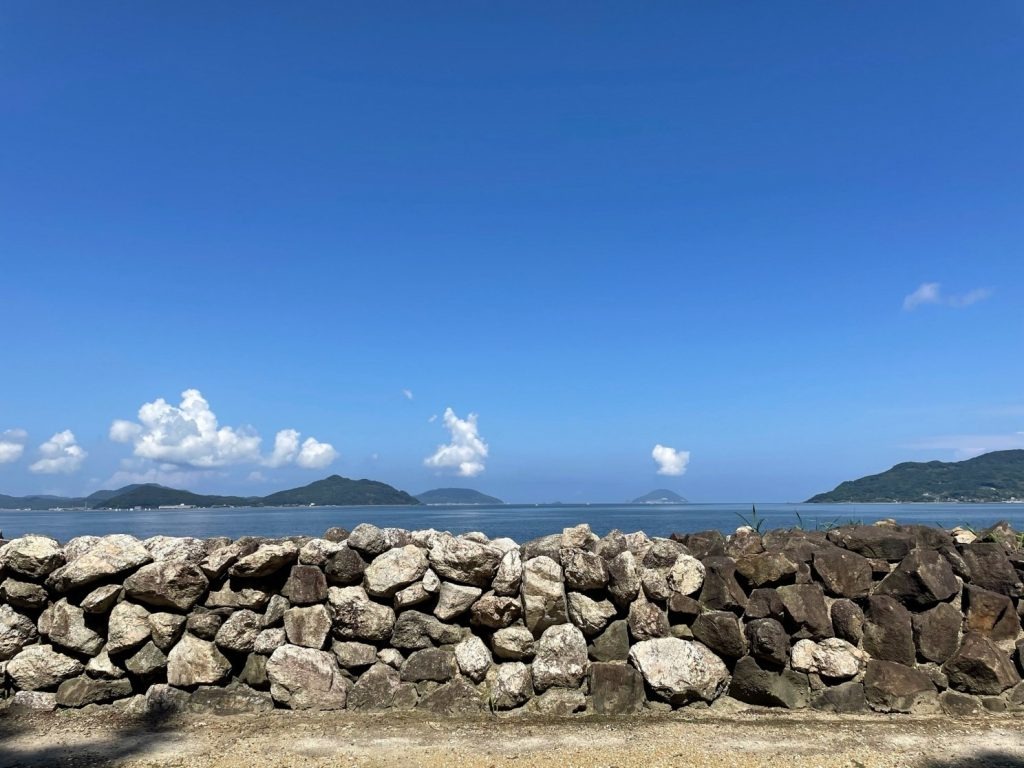
Join us on a walking tour that traces the history of this area—where multiple eras, from the Kofun period to the Mongol invasions, intertwine—against the backdrop of the picturesque coastline overlooking Hakata Bay. In the western part of Fukuoka City, nestled amidst the lush natural landscapes of sea, mountains, and pine forests, you’ll discover not only historical sites related to the Mongol invasions, but also numerous ancient burial mounds and shrines steeped in ancient legends, all standing quietly within the surroundings.
Immerse yourself in the layered stories of this area’s long history as you explore its natural beauty and historical sites.
The best place to start exploring the Genkō Bōrui is here!
[Genkō Bōrui (Imazu Section)] (Nationally Designated Historic Site)
The Genkō Bōrui were defensive fortifications built to protect Japan from the Mongol invasions. During the 13th-century Kamakura period, Hakata Bay was the site of two invasions by the Mongol Empire (Yuan Dynasty), which ruled over vast stretches of the Eurasian continent (the Bun’ei Invasion and the Koan Invasion).
Although the Mongol forces managed to land during the first invasion (the Bun’ei Invasion), Japan overcame this grave crisis owing to the valiant efforts of the gokenin warriors of Kyushu and the swiftly constructed fortification wall—a 20-kilometer-long stone wall known as the Borui. Remnants of the Genko Bōrui can still be traced throughout the city, with 10 sites across 7 locations designated as National Historic Sites.
 |
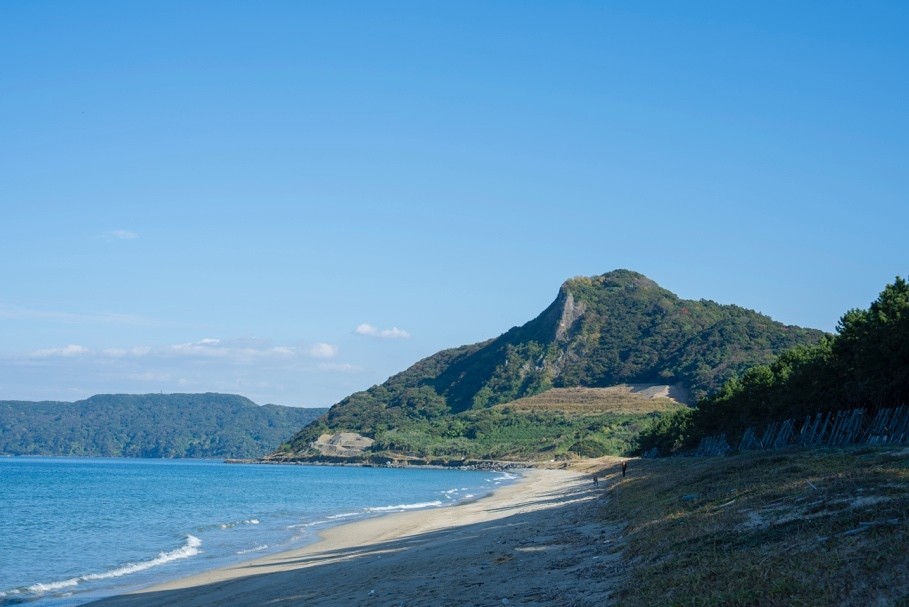 |
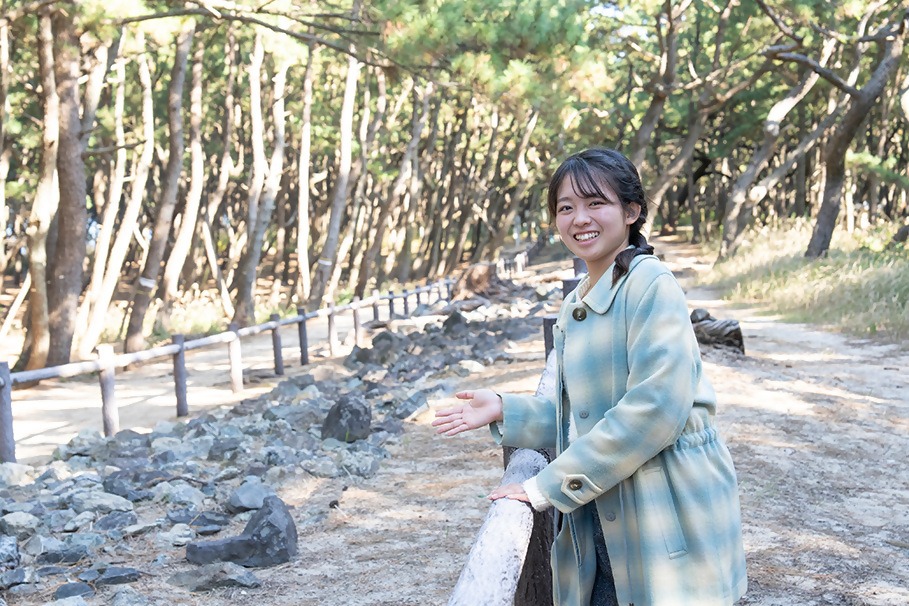
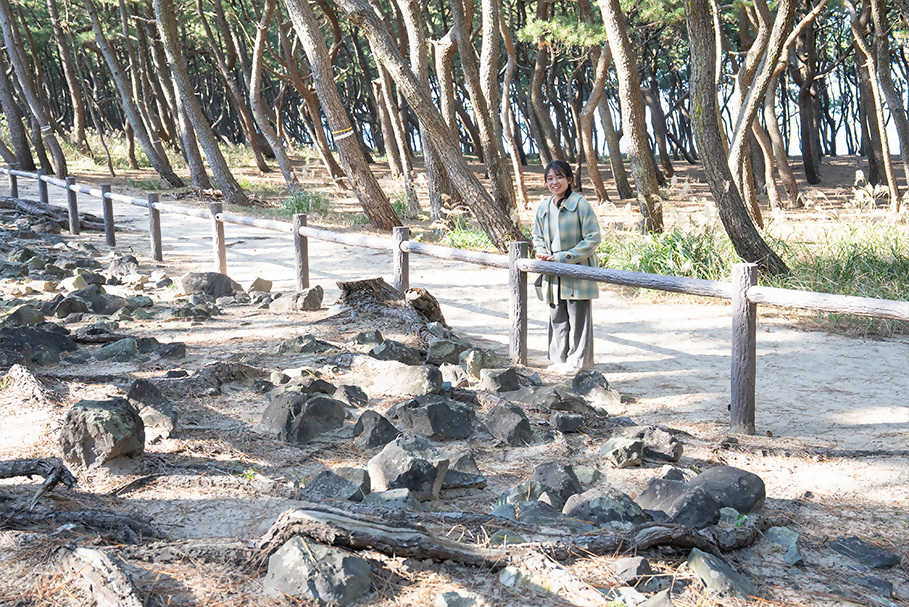
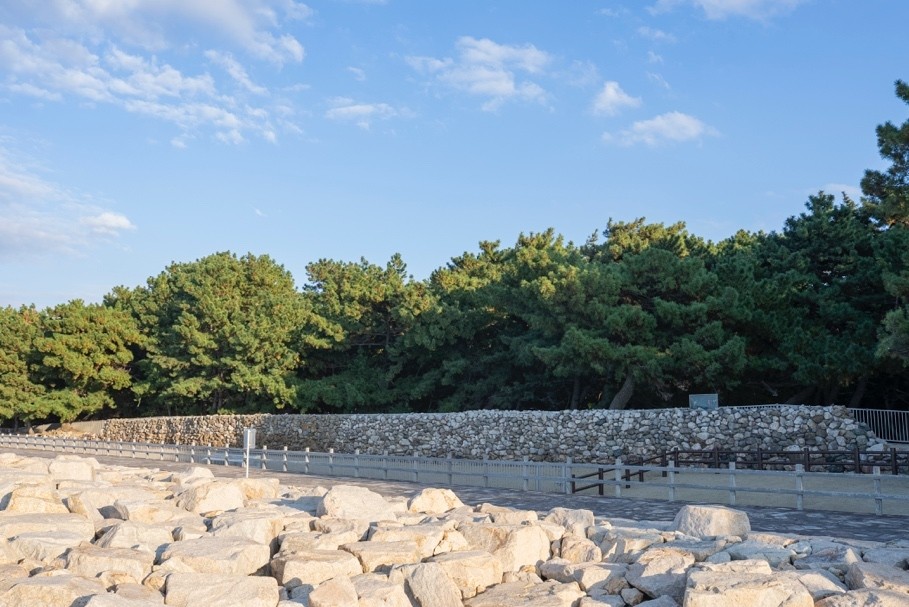
Among these, the “Genkō Bōrui (Imazu Section)” which stretches for approximately 3 kilometers along the coastal sand dunes from the foot of Mt. Koshidake in the west to the foot of Mt. Bishamonyama in the east, is the best-preserved and is a must-see spot for getting a sense of the situation at the time. It is said to have been built by gokenin warriors from Hyuga Province (present-day Miyazaki) and Osumi Province (present-day Kagoshima) who divided the construction work among themselves, and approximately 200 meters of it is currently open to the public.
 |
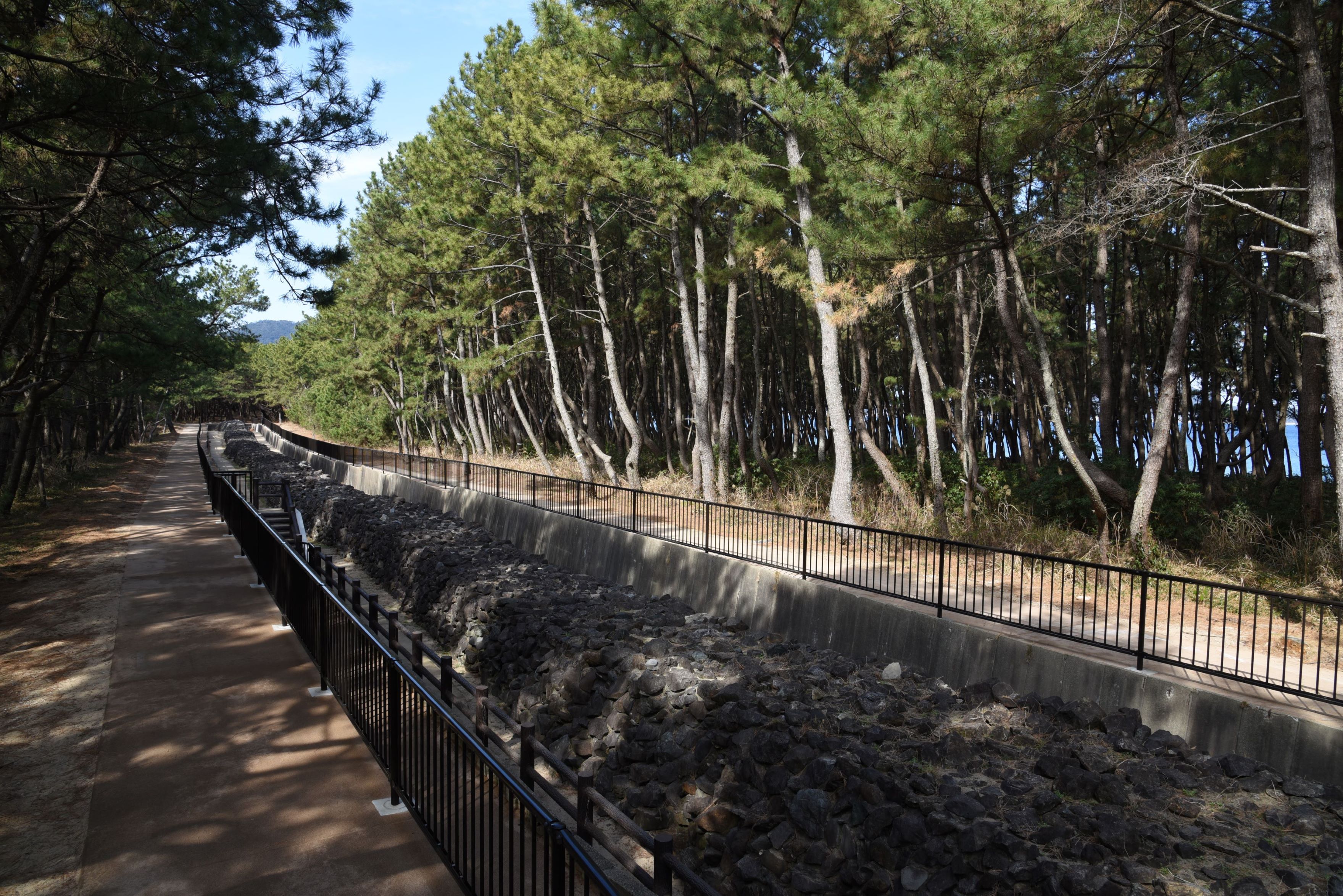 |
Viewed from the sea, Genkō Bōrui stands approximately 3 meters high. Following the intense battles of the Bun’ei Invasion, the Mongols, feeling confident in their victory, initiated another large-scale invasion. They even loaded their ships with daily necessities, such as stone mills intended for use after landing, as if certain of their triumph. What must they have thought when they finally crossed the sea and arrived at Hakata Bay, only to find these towering fortifications before them?
Viewed from the sea, Genkō Bōrui stands approximately 3 meters high. Following the intense battles of the Bun’ei Invasion, the Mongols, feeling confident in their victory, initiated another large-scale invasion. They even loaded their ships with daily necessities, such as stone mills intended for use after landing, as if certain of their triumph. What must they have thought when they finally crossed the sea and arrived at Hakata Bay, only to find these towering fortifications before them?
At the adjacent Genkō Hiroba (Ruins Plaza), visitors can find panel displays and videos explaining the Genkō Bōrui. If you’d like to learn more, please be sure to stop by!
◎Genkō Bōrui (Imazu Section)
■Address:Imazu, Nishi Ward, Fukuoka City
■Access:
A 10-minute walk from Fukushimura Shisetsu-mae bus stop on Showa Bus
Parking available (free): 4820-2 Imazu, Nishi Ward (Social Welfare Corporation No-no-hana Gakuen)
■Phone:
092-711-4984 (Fukuoka City Regional Tourism Promotion Division)
A site depicted in the National Treasure “Moko Shurai Ekotoba” (Illustrated Account of the Mongol Invasion)
[Genkō Bōrui (Iki-no-matsubara Section)] (Nationally Designated Historic Site)
 |
 |
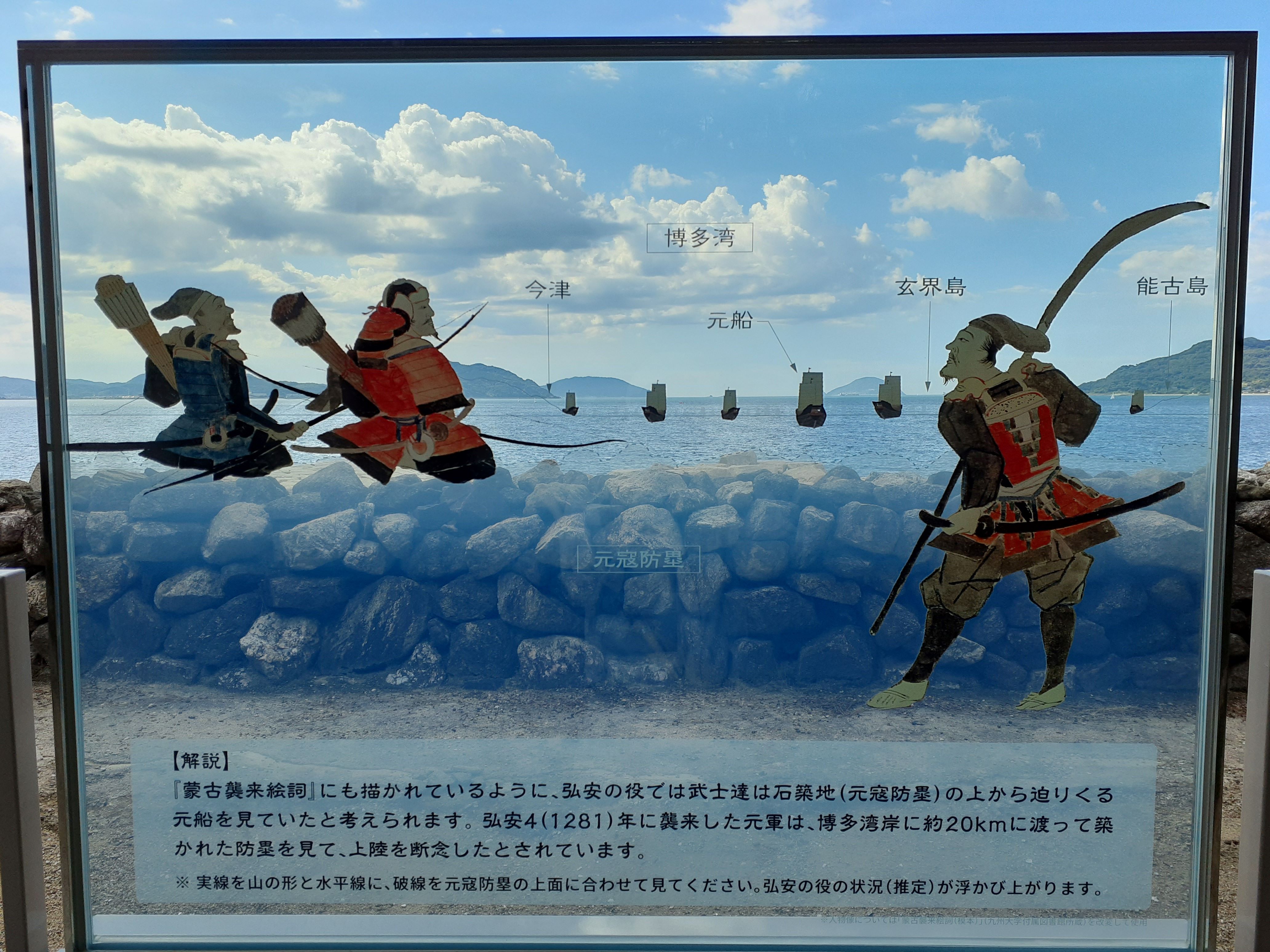
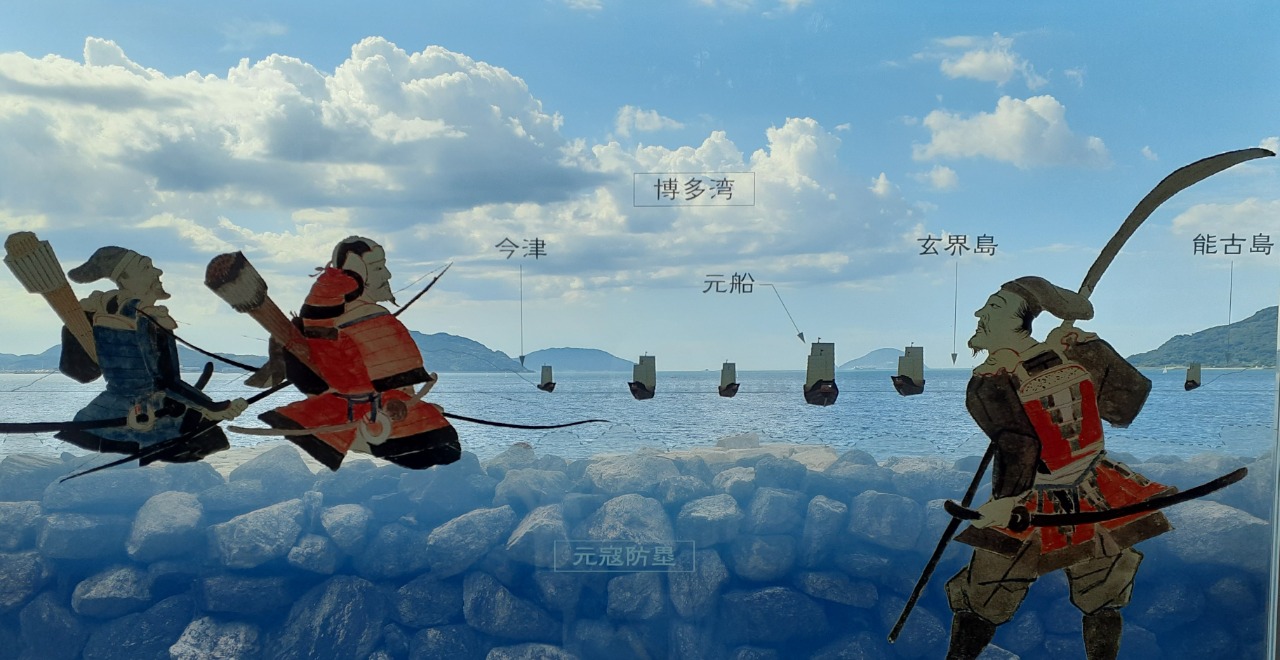
▲Acrylic panels have been installed on-site for visitors to visualize the scene as it was at the time
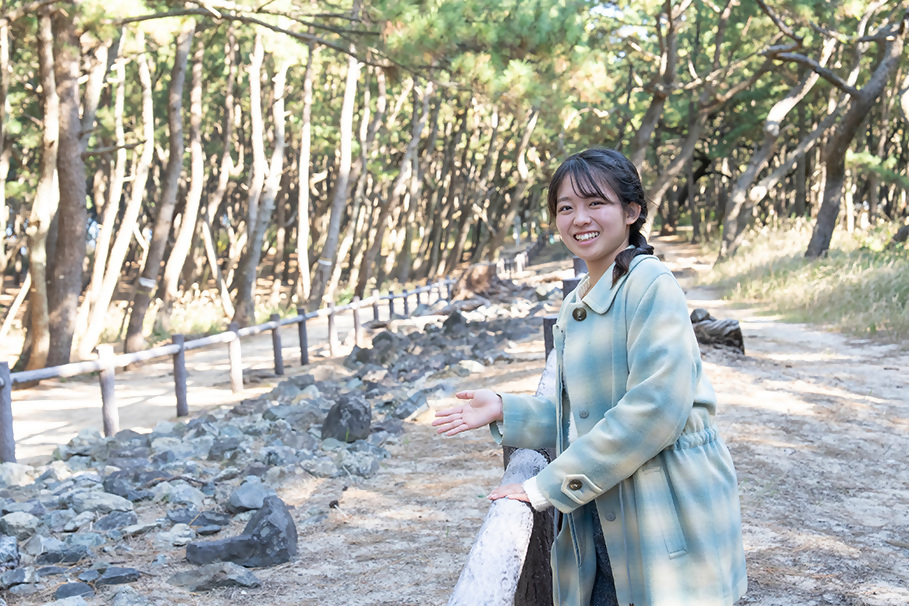
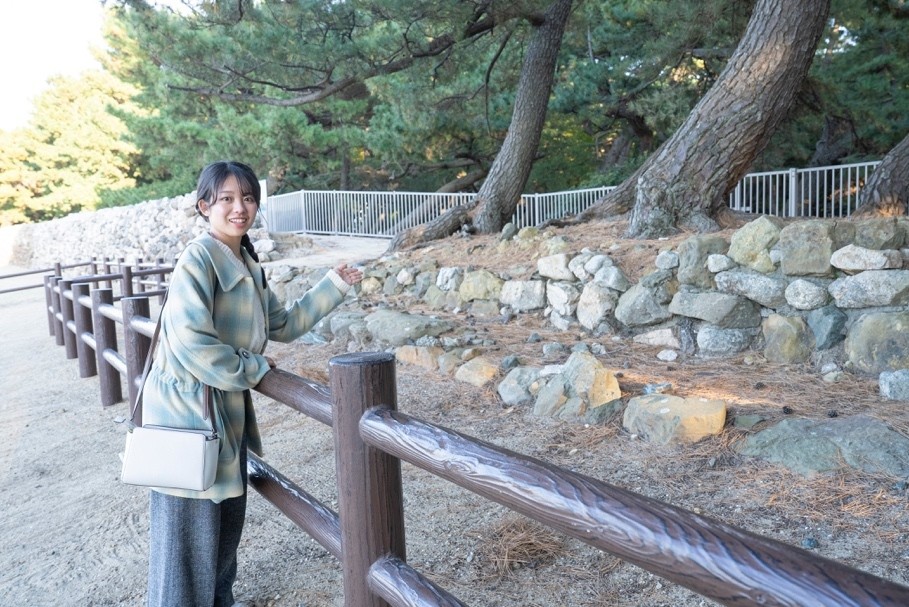
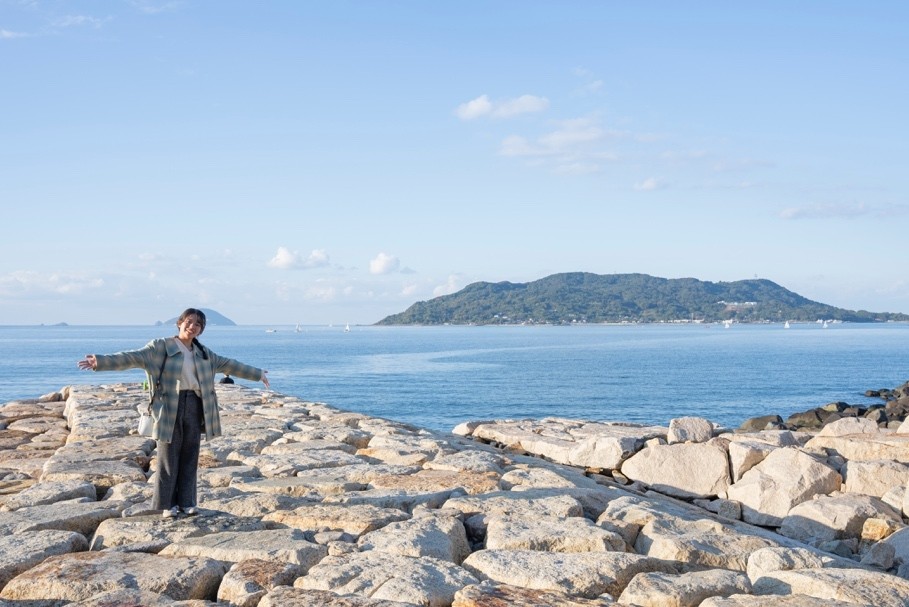
The “Genkō Bōrui (Iki-no-matsubara Section)” stretches approximately 2.5 km, tracing the boundary between the white sandy beach and the pine grove. The construction of this section was overseen by the gokenin warriors of Higo Province (present-day Kumamoto). The National Treasure “Moko Shurai Ekotoba” (Illustrated Account of the Mongol Invasion), which is said to have been commissioned by Takezaki Suenaga—a gokenin of Higo Province who distinguished himself during the Mongol invasions—depicts a scene in which Takezaki Suenaga and his party are marching past the Genkō Bōrui (Iki-no-matsubara Section).
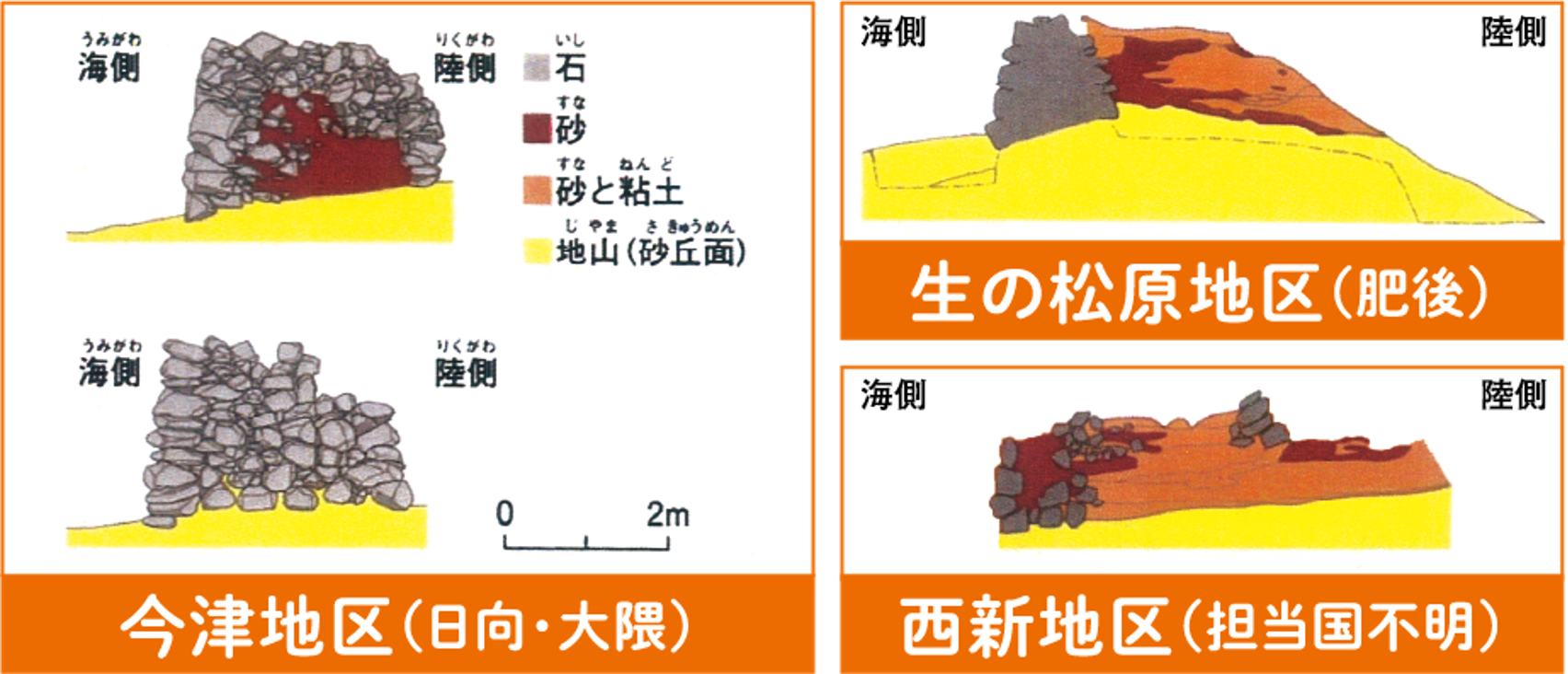
▲Cross-section of Genko Borui. The structural differences between each section are evident.
Excavations have revealed that the structure is composed of a mixture of stone, sand, and clay. Although its design differs from that of the Imazu area, both structures have a steep seaward face and a gentle landward slope, which makes it easier for defenders and their horses to ascend.
While remnants of the Mongol invasions can also be found in Fukuoka and Nagasaki prefectures, Fukuoka City is the only place where the Genkō Bōrui remain! It’s a place where you can experience history firsthand while enjoying the refreshing sea breeze and the scenic landscape of pine groves.
◎Genkō Bōrui (Iki-no-matsubara Section)
■Address:
Iki-no-Matsubara, Nishi Ward, Fukuoka City
■Access:
About a 15-minute walk from Shimoyamato Station on the JR Chikuhi Line
Visitor parking available (paid), space for one large bus, restrooms available
■Phone:
092-711-4666(Cultural Properties Utilization Division, Culture and Tourism Bureau, Fukuoka City)
A shrine preserving the legend of Empress Jingu
[Iki Shrine]
 |
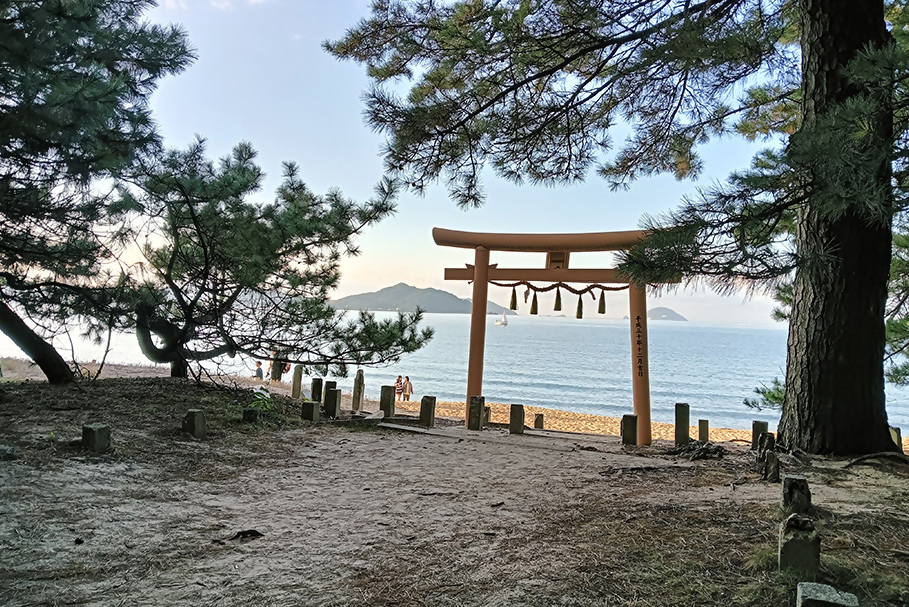 |
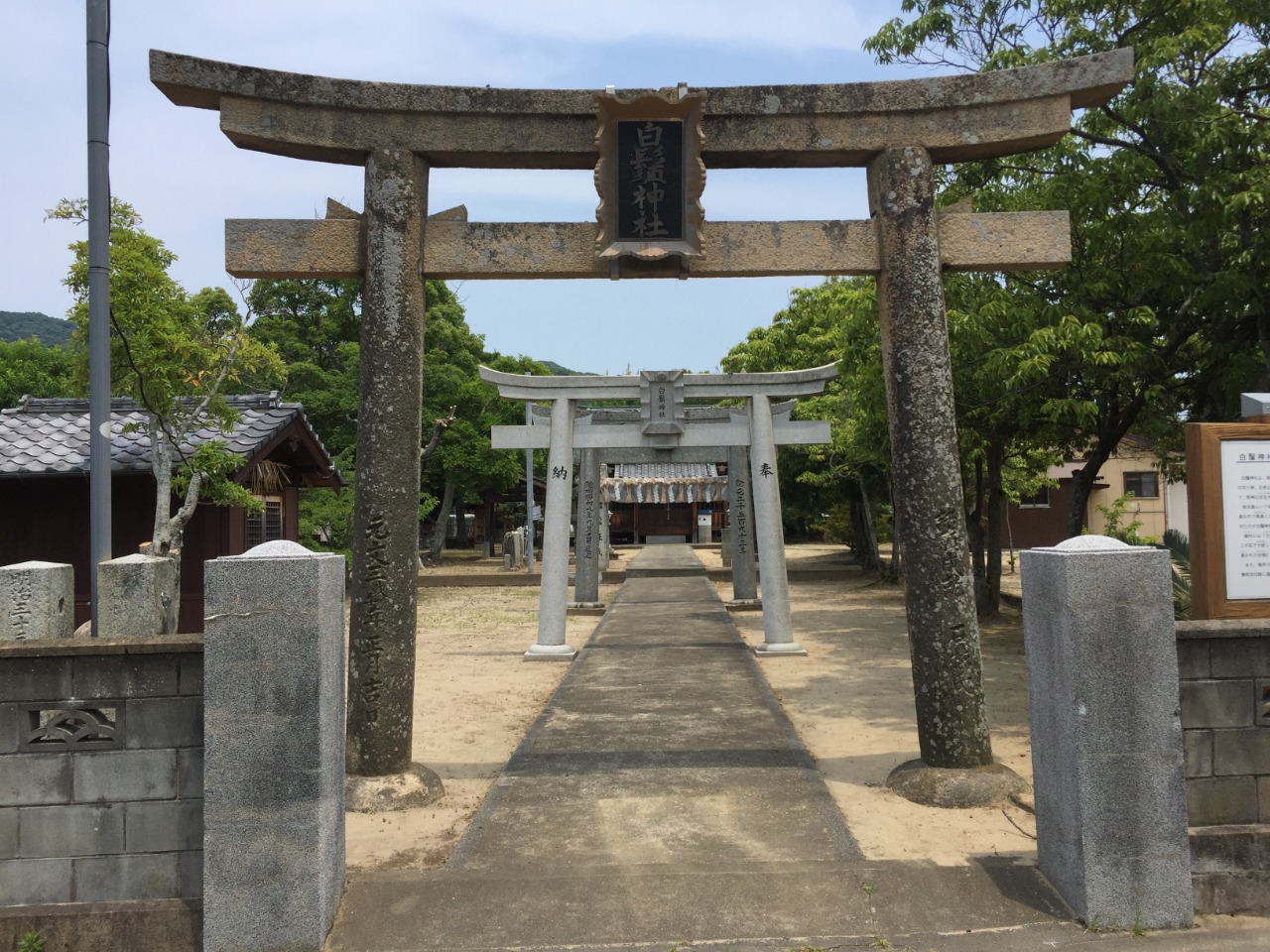
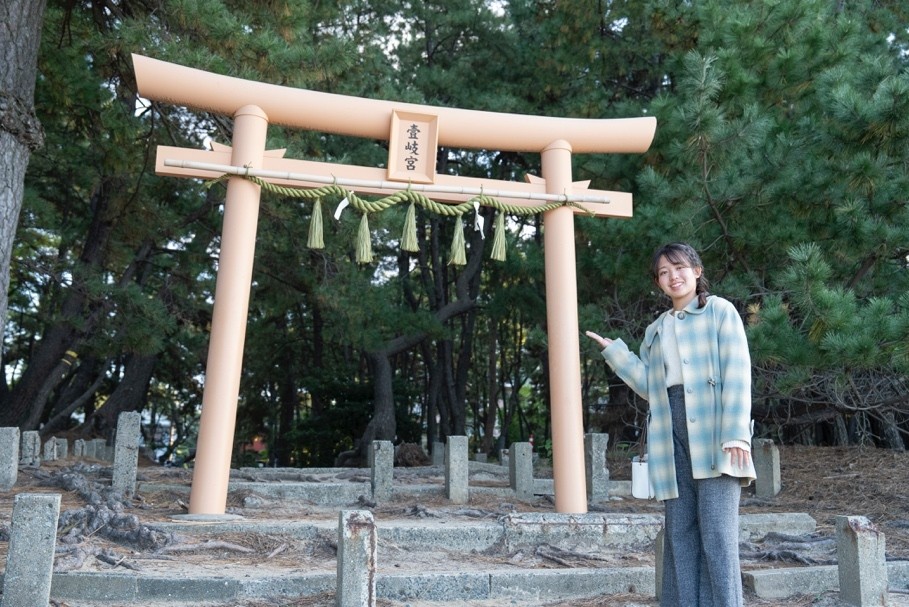
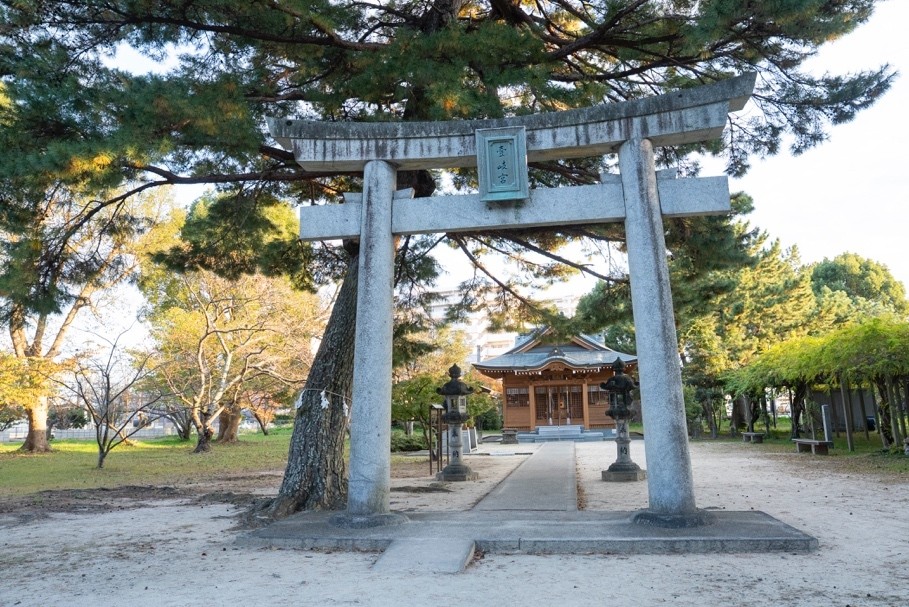
About a 10-minute walk west from the Genkō Bōrui (Ikinomatsubara Section), the first torii gate of the Iki Shrine comes into view. The shrine is dedicated to Iki-no-Atai maneko, a figure who appears in the “Nihon Shoki” (Chronicles of Japan). When Takenouchi-no-Sukune, a legendary figure who served the Yamato court, was falsely accused and his life was threatened, Iki-no-Atai maneko offered himself as a substitute. He is enshrined here for his loyalty. Furthermore, the place’s name, “Iki-no-Matsubara,” is associated with a legend about Empress Jingu. While en route to the Korean Peninsula, it is said that she planted a pine branch upside down to pray for victory. Miraculously, it took root and grew. Part of that pine tree’s trunk was dedicated to Iki Shrine, and is said to have given rise to the place name.
An ancient burial mound bustling with children!
[Yamanohana No. 1 Kofun]
 |
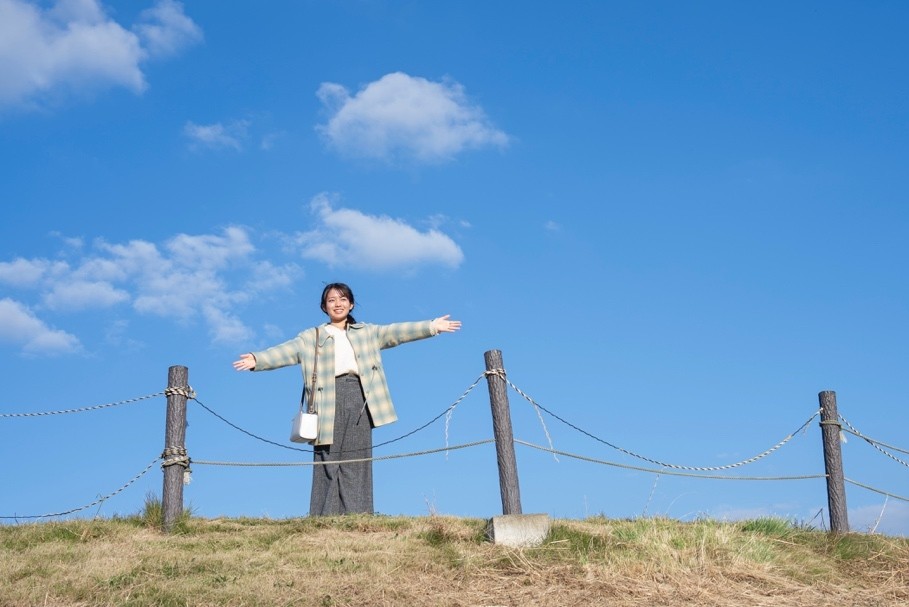 |
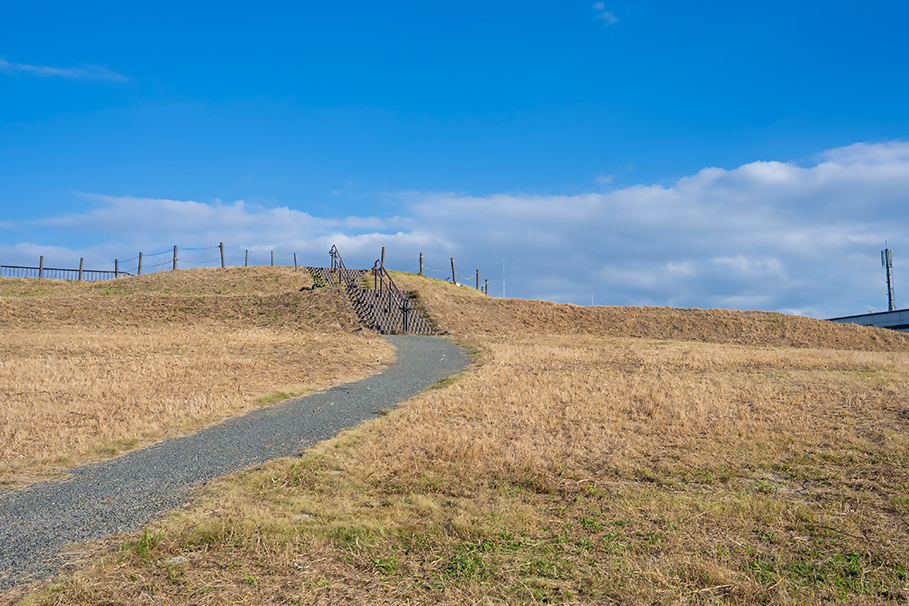
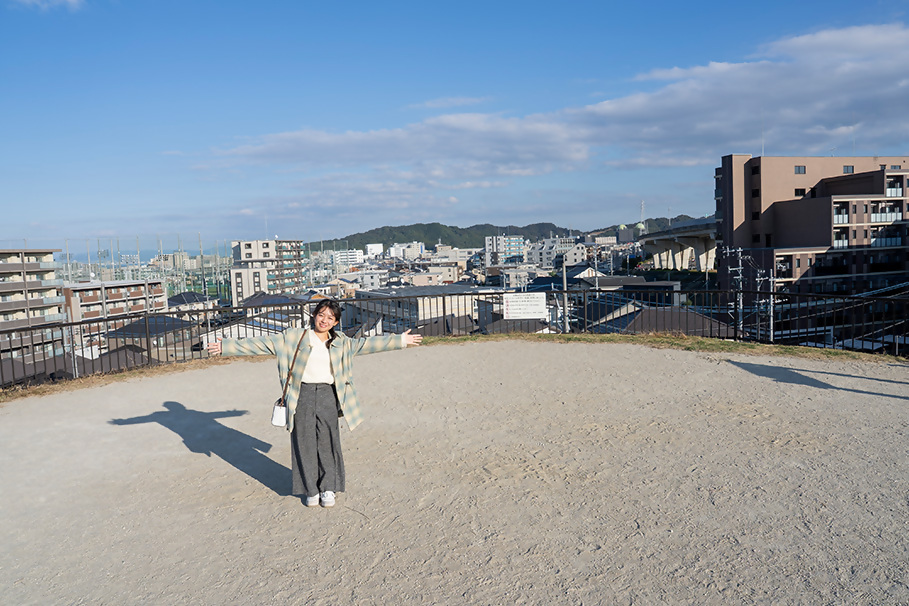
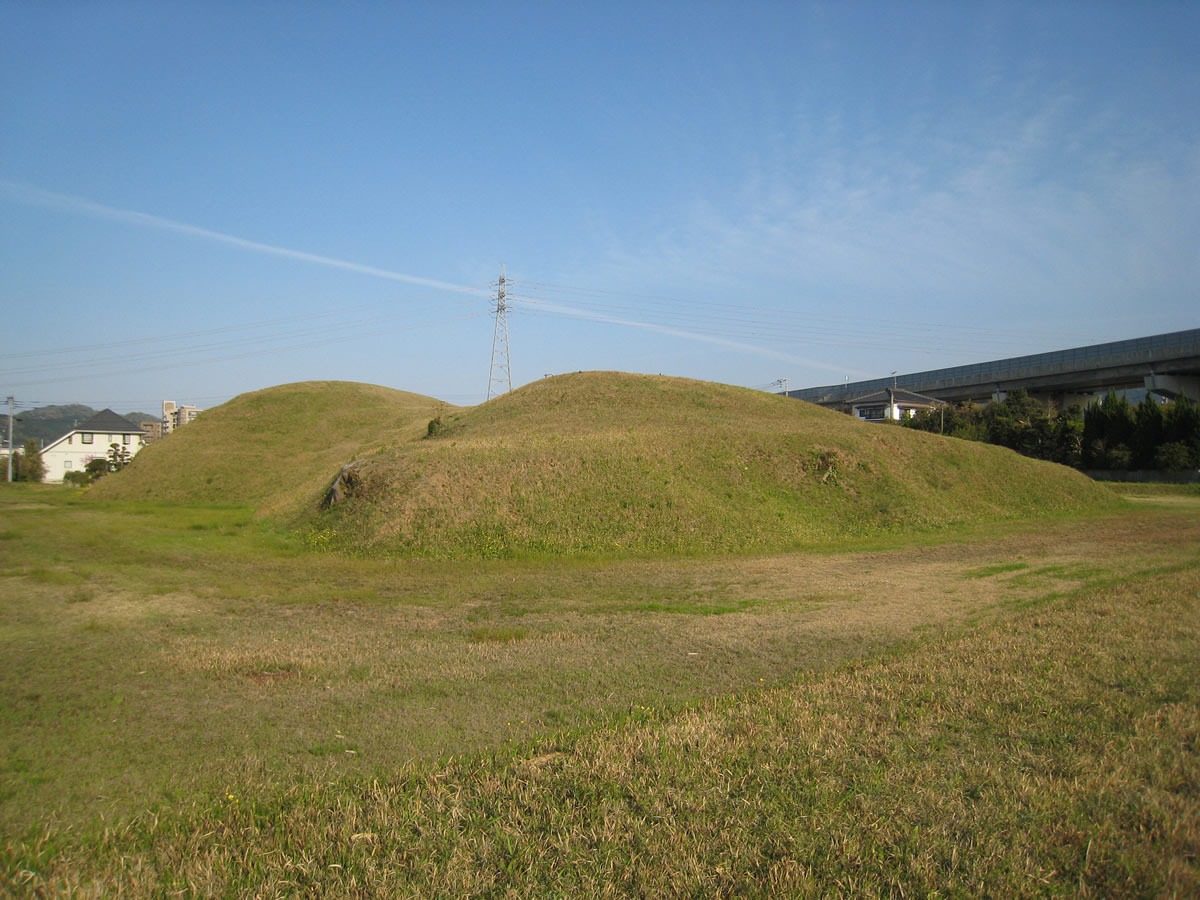
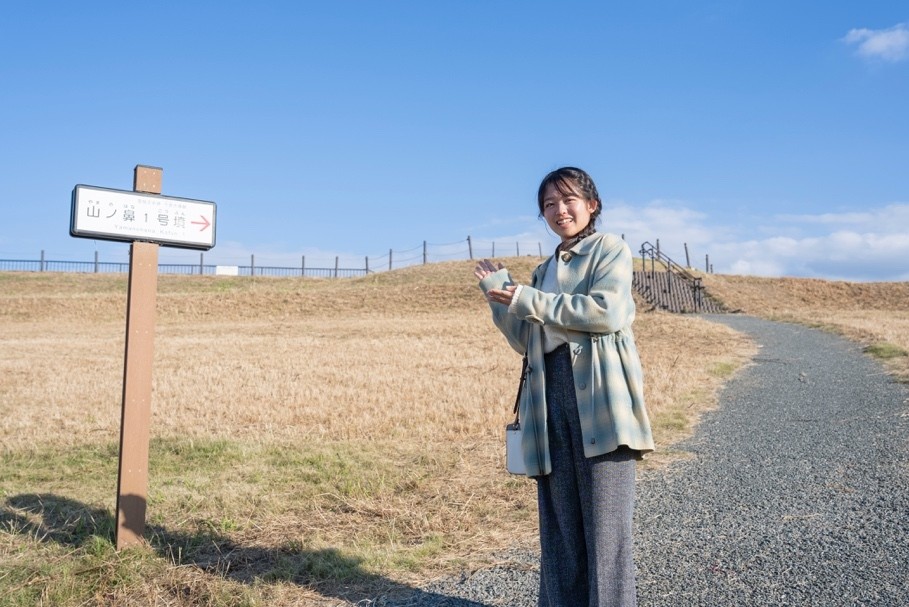
Heading slightly farther west brings us to the Yamanohana No. 1 Kofun. This area is known for its numerous burial mounds, which were constructed during the Kofun period. The “Imajuku Kofun Cluster,” centered on seven keyhole-shaped burial mounds, including Yamanohana No. 1 Kofun, has been designated a National Historic Site.
The Yamanohana No. 1 Kofun is a keyhole-shaped burial mound measuring 38 meters in length. Excavations have unearthed fragments of a bronze mirror from China’s Later Han dynasty, as well as Haji-ware pottery dating from around the fourth century. Based on these findings, it is believed to be the oldest chieftain’s tomb in the Imajuku Kofun Cluster.
This site, located near Kyudai-Gakkentoshi Station on the JR Chikuhi Line and the Fukuoka City Seibu Regional Center (Saitopia), has been developed into a burial mound park. An earthen embankment protects the mound, and curbstones have been installed to help visitors visualize its original shape. Many first-time visitors reportedly don’t realize that it is a burial mound. The area resembles a small hill with a panoramic view of the surroundings, and informational display panels have been installed for visitors. It’s the perfect spot to stop for a refreshing break while strolling through town.
◎Yamanohana No. 1 Kofun
■Address:
265-1 Yamanohana, Tokunaga, Nishi Ward, Fukuoka City
■Access:
2-minute walk from Kyudai- Gakkentoshi Station on the JR Chikuhi Line
Let’s take a peek inside the ancient burial mound♪
[Marukumayama Kofun]
 |
|
 |
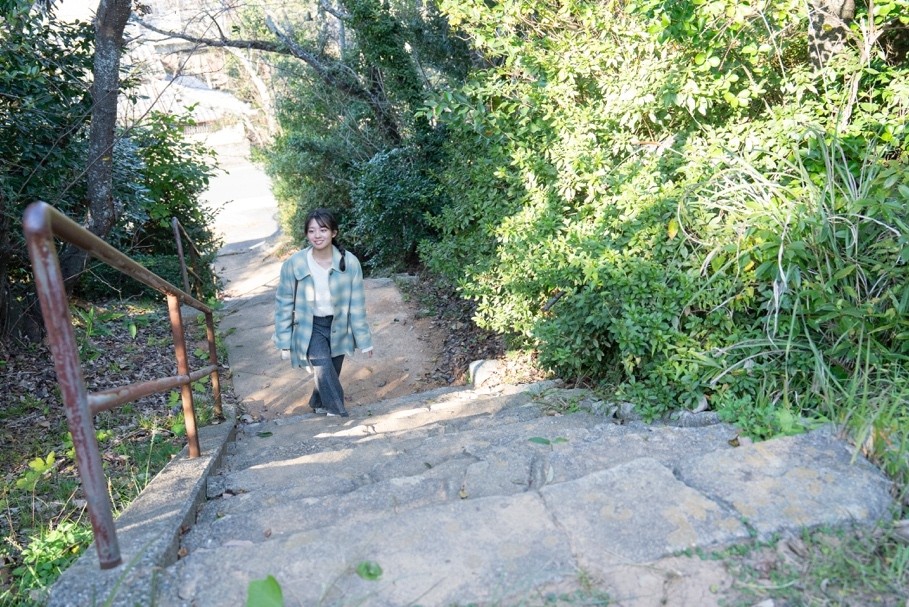 |
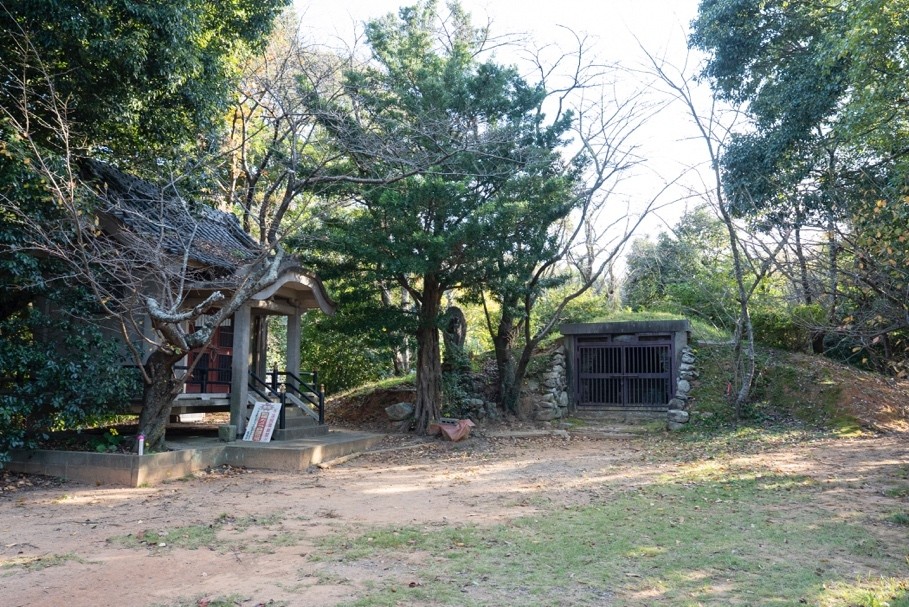
About a five-minute walk further west brings us to the Marukumayama Kofun, another site that is part of the Imajuku Kofun Cluster.
Built in the first half of the 5th century, the Marukumayama Kofun is a keyhole-shaped burial mound measuring approximately 85 meters in length. Although it has been significantly altered by land grading, it is surprisingly the largest of its kind in Fukuoka City, despite being in a residential area!
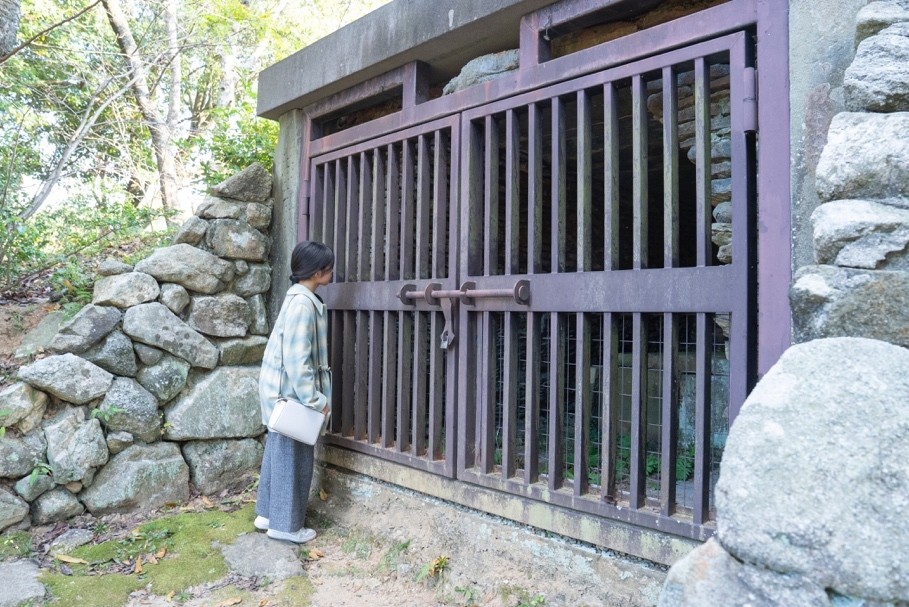
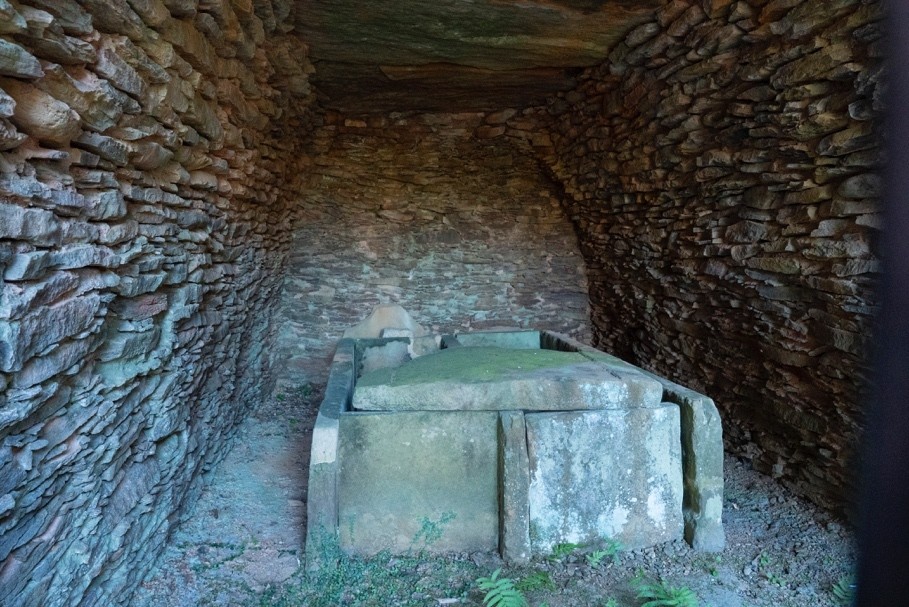
An early horizontal chamber tomb, a style that had recently been introduced from the Korean Peninsula, lies at the top of the rear circular section. Inside is a stone coffin that once held a body. The large stone coffin is divided vertically into two sections by a slab-like stone, suggesting that the burial was intended for at least two people. The stone chamber is still preserved at the site. If you peer through the entrance, you can get a close-up view of the stone coffin.
The stone chamber was discovered during the Kan’ei period of the Edo era. Burial goods, including mirrors and iron swords, were unearthed, and this discovery is recorded in “Chikuzen-no-Kuni Zokufudoki” (Description of the Land of Chikuzen) by Kaibara Ekiken. Since then, local residents have restored the stone chamber numerous times and have carefully preserved it to this day.
Every August, the Marukumayama Kofun Memorial Festival is held here, showing how this ancient burial mound remains woven into local faith and daily life.
◎Marukumayama Kofun
■Address:
Susenji, Nishi Ward, Fukuoka City
■Phone:
092-711-4666(Cultural Properties Utilization Division, Culture and Tourism Bureau, Fukuoka City)
One of the highlights of Nishi Ward is the abundance of ruins where you can see and touch remnants of history. Take a walk through these sites and the nearby ruins to get a real sense of their scale!
◎List of visited spots
- Genkō Bōrui (Imazu Section)
- Genkō Bōrui (Iki-no-matsubara Section)
- Iki Shrine
- Yamanohana No. 1 Kofun
- Marukumayama Kofun
READ MORE>>The Wall that Drove Back the Mongols: The “Genkō Bōrui” Fortifications